Tuesday, November 3, 2009


After reading "On the Shortness of Life," it has become apparent to me how little time there is for each of us to live on the earth. As I wrote in my last post, we would probably live our lives differently if we knew exactly how long we would live, but, of course, no one knows that information. For the young person, we think we have unlimited time to live our lives. We think there is 50+ years left for us to live, and that is plenty of time to goof off and have fun.

Time is an idea that many people do not seem to take seriously. It is the one possession of ours that cannot ever be regained once lost, yet we waste many hours every day on tasks that do not matter in the long run. We can all think of a person in our life that we would spend a few hours with, but we would not give this person any of our money. Money can be replenished; time cannot. Many of us go about our days and think that we will never run out of time to spend, but the complication is that none of us knows exactly how much time we have. Money can be counted; time cannot.

One day, when we are presented with the real prospect of our death, how will we view the way we spent our time? There are many parents who devote so much of their time to making money at their job that they miss their children’s early years. After they are grown and leave the house, these parents will wonder how that happened so fast. The parents will most likely have a large bank account, but they will have missed the most important thing—watching their children growing up. I know that my father told me that he decided a long time ago that he would not forsake spending time with me to advance his professional career. We hear many people say that parents should spend “quality time” with their children, but my father has a different view. He said that “quality time” was not as important as “quantity time.” If we are given the chance to look back at our life at an old age, what will be our greatest regret? Will we wish that we spent more time on our job, or more time with our family?

As I said, I believe that time is the most valuable possession that any of us have. Some people put a monetary value on their time and give it away grudgingly (“Son, I want you to know this hour I am spending with you is costing me $75.”), but others realize that their time is the most precious gift they can give. Because we never know how much time we have left, that hour we spend with out son out on the lake could be our last hour. I know that when I look back on my childhood, I will value how much time I spent with my father and the love that we have, and I will care much less about how much money we had.

Life would be very different if everyone knew exactly how long he or she would live. People would, no doubt, make many different decisions regarding their hobbies, family, and career. Assuming the life expectancy holds steady at 80 years of age (if it were to decrease, a person’s life would not change much. He would simply get married earlier, enter the workforce earlier, and retire earlier), a person’s life decisions would be influences by the prospect of a shortened life. If a person knew he would only live to be 20 years old, well, he might decide to not finish high school and instead focus on having fun with his remaining years. If a person knew he would die at 40 years, he may choose not to purchase life insurance and not put any money toward a retirement account. Of course, no one knows at what age he will die, so his discussion has no real merit.

There is a certain group of people who believe the world will end in 2012. They are so certain of this belief that they quit work when they had enough money to survive the next few years in preparation for a catastrophe. They stockpile food and rations in makeshift underground shelters in preparation for a global disaster. These people had better hope they are right, because if they are not, they set themselves up for a tough time in 2013.

These people are some of the only who actually life their lives with a definite time frame. They know exactly what they want to do for the next 3 years they believe they will be alive. They do not value work anymore and focus on gathering enough supplies to survive. Of course, this is not the topic that was assigned, but it does offer some insight into how people live when they believe they will not live much longer.

No one knows for sure exactly how long he or she will live. There are people who think they will die young or the world will end; consequently, they spend all they money by living in the moment and have no money in a savings account for use later in life. They must continue to work into their old age in order to support themselves. There are other people who spend their whole lives pouring themselves into their work or building a business from the ground up. They wait for the day when they can retire, sell their business for a huge profit, and relax while living in luxury. However, that individual could easily die in his 40’s from an accident or an unexpected illness. Twenty years of hard work produced no benefit for that person. He was waiting for a payout that never happened.

Maybe the lesson to take away from this is to plan our career with some sort of moderation. I cannot say that my career choice would be much different if I were to live to be only 40 or 50. I would possibly put less into my savings and retirement account and spend more money on luxury items. I would maybe be more apt to take riskier investments because I would know there is not much time for safe, small returns. However, my career choice would probably be much the same as it is now.

Tuesday, October 27, 2009


While I just wrote on the topic of design, I think that it important enough to devote another post to it. I will try to make this one as different as possible by not focusing as much on specific examples but examining the theories behind those designs.

As I was growing up, my father would always talk about how something was a "bad design." As I got older, we would always talk to each other about what we thought was good or bad about some object. He would tell me how the window switch in his car was a bad design or how the new table saw he just bought was a great design. This has made me more aware of how things are build around me. As I go through my life, many times I see something that I wonder how it was ever passed through a focus group. Of course, as I was trying to think of topics for yesterday’s post, they all slipped my mind. It is always tough to think of things like off the top of my head.

My father used to work for the US Fish and Wildlife Service, and part of his job was traveling to different wildlife refuges around the country and reviewing the design and accessibility of their features. He would read their pamphlets and drive around the refuges on the tourist roads to see how the average person would experience one of the refuges. Many times, he would point out something that was difficult for him to understand. Sometimes a sign or brochure would be worded vaguely, and he would tell the manager what he thought was wrong with it. Of course, most of the time, the officials at the refuge would say they did not see a problem. This is the attitude that I think contributes to the abundance of bad designs. People do not want to be told there is some problem with their product; they do not take someone else’s advice and a new bad design in introduced.

Sometimes, bad designs are created out of an attempt to save money. When something is made cheaply, corners are cut which can compromise the product. This is the reason for the plastic cases I wrote about yesterday. This is also why many cars are made with cheap materials and shoddy craftsmanship. I have had so many plastic break on cars it is unbelievable. Typically this happens with the interior trim pieces. Just last week I was exiting my mother’s Dodge Durango when plastic covering for the seatbelt snapped off. This is in addition to the several other pieces of the seat that have fallen off since she bought it a few years ago. These changes to the design of car parts has stemmed largely from the cutting of costs by car companies over the last several decades.

I some times wonder about the work of a focus group. Are they not supposed to review new products and give their feedback? With all this, how could a bad design be introduced into the marketplace? I would think that if enough people review a product all the flaws could be worked out of an item. Perhaps the reason lies in the fact that people do not always like criticism. If a person points out a design flaw, the designer may think that it really is not a problem and leave it the way it is. It could also be due to not enough people reviewing the product. Different people use a product different ways. Some people may not notice any defect while others find it unusable.

I cannot offer any panacea for bad design. It is my opinion that the best option is to increase the duration of the testing phase and the number of testers. In addition, the inventors should be more receptive to the criticism of product testers. Reviewers usually do not harbor any malicious intent—they just want a product to be the best it can.

Monday, October 26, 2009

One person’s definition of a beautiful design may be the complete opposite of another person’s. There are some pieces of art that leave collectors in awe, yet the majority of the population does not understand what is so special. My ideas of good and bad designs are probably going to be different from those of my readers, but here is my opinion on 4 designs.

Good:

1. 2005-2009 Ford Mustang
I have a somewhat of a biased opinion toward this example. This picture is of my personal car that I got several years ago. I chose this particular model for its unique design features. This vehicle was developed to resemble the classic Mustangs of the 1960’s. It was designed to appeal to older men who may have owned one of the original models as well as younger people like me who learned to love the style for the first time. This idea of a “retro” design was first used by Ford for the Mustang; however, it has been duplicated several more times with other car companies. Chevrolet recently re-introduced the Camaro and Dodge released an updates version of the famous Challenger. Both of these models are made to resemble the classic muscle cars of the 1960’s. Clearly, the design is one that appeals to many people because those cars have become very successful sellers for the car companies.


2. Burj al-Arab hotel in Dubai, U.A.E.
This hotel was constructed several years ago as the tallest hotel in the world. It is the true definition of luxury with the rooms beginning at about $2,000 per night. The restaurants offer some of the finest cuisine available. While originally constructed as a hotel, it has become much more than that. It was designed to look like a sailboat in the middle of the sea. It is one of the most recognizable landmarks of the region and it is what most people associate with the country. When I tell people I went to Dubai, they say they have no heard of it. I then say it is the place with the sailboat hotel and most people realize that they, indeed, have, heard of it. The Burj al-Arab is even seen on some of the license plates of cars in Dubai.


Bad:

1. Scrubbing Bubbles Automatic Shower Cleaner
My sister gave me this device that she was supposed to test in her home. I was excited about it as I thought that it would help cut down on the time I spend cleaning my shower. However, after I installed it, a major problem arose. The unit hangs down under the showerhead. Well, I like to stand right under the water, but the unit blocks me from doing that. I have to angle the showerhead in order for me to get wet. Because of this, I do not use the automatic cleaner anymore. I am thinking it might be a good idea to hang it from a hook on the opposite side of the shower.


2. All plastic cases that snap closed
Someone thought these were a great invention. The entire case can be molded out of plastic with no additional parts. This cuts time and production cost. The clasps that keep the case closed are molded right into the case. All that attaches them is a thin, flexible row of plastic. Inevitably, after much use, these clasps become brittle and crack. They then break off a few uses later. Well, after they are broke off, what keeps the case closed? Nothing, that’s what. The case is basically ruined because the manufacturer wanted to keep costs down. This is exactly what is happening to my Dremil case. One snap is halfway broken off. The other one still holds fast, but for how long? I open that case about once a day, so I don’t have much time left before it becomes useless.

Thursday, October 22, 2009


The automation of many tasks is seen as no great deal today, but that was not the case several decades ago. Daniel Pink uses the example of John Henry and the machine that was able to put him out of a job. While the story may be fictional, it accurately represents the attitudes of some of the people at that time. John Henry was faced with the real prospect of being replaced by a mechanical drill that was reported to work faster and more efficiently than any man ever could. John Henry wanted to represent the laborer and show the inventor that men would always be needed for work. In the end, he was able to defeat the machine but at the expense of his own life.

This sort of resistance to change is what gives many people grief. They may not want to accept that new technology can perform their jobs more efficiently but, many times, it is true. Think about where we would be today without machines to do everyday tasks. Take our cars for example. Today, only the most high-end automobiles are assembled completely by factory workers. Robots replace most of the people on an assembly line. They cut and stamp the sheet metal, weld the components, spray the cars with paint, check for proper fitment of panels, stitch upholstery, and lift all of the heavy car parts. Workers are usually present to oversee the machines in case of a malfunction and for final quality control. Their jobs have been largely replaced, but that is not al bad thing. Cars are now produced quicker and cheaper than ever before, and while the personal touch of a trained technician are largely gone, consumers do not seem to mind.

Today, people rely on the automation of tasks countless times in their lives. They wake up to an alarm clock, drink coffee from an automatic coffee maker, use an electric toothbrush, let the cruise control maintain their speed over their commute (in addition to many other automatic controls in a car), have en elevator take them to their floor, use a computer to write letters and reports, have the climate control keep them at a comfortable temperature, let a cash register/calculator determine correct change for a purchase, and allow a machine answer their calls when they are away. Clearly, there are countless tasks everyday that we let machines do for us. We have come to rely so heavily on them that if electricity were interrupted for any period of time, we would be lost.

The automation in out daily lives has caused us no real harm. In fact, it has actually led to many benefits to us. We can be more productive in our endeavors because we do not have to worry about the small tasks. Machines can do most everything we can do, often at a greater speed and efficiency than we can. Complex mathematical calculations would be near impossible if it were not for powerful computers which can do them for us. They can perform millions of calculations per second while we can only do a few.

Some people worry about a potential loss of our “humanity” that could come with increased automation. Who knows years down the road what will be done for us? Our cars may drive themselves and our food could be cooked automatically. This is a valid concern. I know there are some circumstances where I would rather do a task than have a machine to it for me. While it may be true that it could be done more accurately and efficiently if left to a machine, I get some satisfaction out of performing a manual task. That keeps me feeling as if I have some control over a situation.

Wednesday, October 21, 2009

As we discussed in class, it seems that today’s educations system tends to focus primarily on L-Directed thinking. We are forced to sit and memorize so much information that a large percentage of students will give up on their education. That is one of the reasons I believe we have so many high school dropouts. They are feel so much strain in their education that they feel they cannot or will not continue with it. Memorization and regurgitation is a tedious task for anyone, and sadly, that is what much of high school is based on. We are taught to learn important dates in history, memorize patriotic documents, practice our multiplication tables, spit back mathematic equations, and of course remember how to spell. This inundation of information is what leads many young people into special needs education programs.

Maybe if we did not concentrate so much on the mundane, L-Directed tasks, youth would not feel so burnt out. In class, some people brought up the idea how some people say they “are not _____ people.” You could put math in that blank or any number of other subjects. Some people do not excel at reading comprehension, memorization, synthesization, or any number of other skills. This is just how some people are made. Their brains are wired differently from other people. These students may excel at more hands on tasks such as experimentation or manipulation of objects. This is a known fact that I have heard many times in the classroom. People study differently. Some people find the use of flash cards essential for their learning. Others need to read the textbook to glean all the information they can. I tend to just read over my notes many times until I begin to grasp the information. Flash cards and the reading of text usually do not benefit me as much as they do other people.

My point is that people learn differently, and they should be given an opportunity to learn in the way that they are most comfortable. I am a science major and my line of study is very interactive. I am constantly performing experiments to reinforce what I learn in class. This type of activity reinforces what I learn much better than if I was only sitting in a classroom. My high school was very limited in its science department. I did not have any sort of laboratory experience until I was a freshman in college. In high school, I took chemistry and learned from a book. I never actually saw any chemical reactions taking place. When I got to General Chemistry in college, I was a little lost in the laboratory setting. After a few sessions, I began to feel more at ease with the procedures and found that I learned much more than if I was reading from a book or listening to a lecture.

In my high school Biology classes, we tended to look at pictures of anatomical differences in a book rather than actually having a specimen in front of us. A picture can only take a person so far in his or her learning. I took a biology class last semester that involved a great deal of dissection. We would have pictures to look at in an attempt to locate and identify certain structures, but they did not always look the same. I could look at those pictures for hours and not learn as much as I would in an hour of actual dissection. There is something about actually manipulating my hands that makes learning come alive for me.

College provides more experiences for R-Directed learning than high school does. Many times, I work outside for my science classes; that helps me better experience my learning. I have a greater choice of classes to take that are able to better fit my needs. There are some high schools that offer a greater section of classes than I had, but they are not the same as a college. It seems interesting to me to think that in Kindergarten and elementary school we were presented with many hands on activities to stimulate our learning (painting, molding clay, building with blocks, games at recess, etc.). In middle and high school we were weaned off this learning in preparation for book learning. In my college science classes, it seems that the learning is becoming more R-Directed than in my previous schooling. Graduate school in science, I suppose comes with even more experimentation and less lecturing by a professor.

Wednesday, October 7, 2009


Cell phones. They have become an integral part of out lives the same way clothes and cars have. Several decades ago, people did not use cell phones, and they did not imagine there would ever be a need for one. Sure, it would be a convenience, but a necessity? Today, people could not imagine life without a cell phone. Their use has been so hammered into our lives, that there is not hope of changing it now. Take a walk through a college campus any day and you will see about ¼ of the student population on a cell phone. I was thinking earlier this week how it would be interesting to count the number of students on cell phones as they leave the classrooms. It seems that as soon as class ends, students whip out their phones and either make a call or text someone. It must be drudgery to sit in class for 50 minutes and not be able to talk to a friend. I remember in my FYS class, my professor was talking about students on cell phones, and he said that many of them were actually talking to their parents. I do not know if this is valid or not, but it is something interesting to think about.

What about the students from our parent’s generation? They did not need to constantly talk to people on the phone. They survived college life without texting and talking on the phone while walking to class. It makes me wonder what they did with all their free time. They did not have the Internet, limited access to television, and no videogames. They must have…studied! What a concept. However, I am drifting away from the main point.

Today, we have become too dependent on our cell phones. There are certain places that phones are verboten. They are not to be used in theaters, in the classroom, in some finer restaurants, and at gatherings such as church. However, we have found a way around that. Instead of talking, we can now type short messages to our friends silently. Whew, what would happen if that was forbidden as well? Teachers and professors try their best to prohibit cell phone use in their classes, but it really does not have much of an impact. Students will continue to text and classes will continue to be disrupted.


Because cell phones have become such an integral part of 21st century society, I think that some standards should be set regarding polite use of the devices. Of course, most, is not all, phones have a vibrate function in an attempt to minimize disturbance when a call is received. However, we all can hear the noise anyway, and we know what is going on. Sure, try to cover it up and press on the phone with your hand, we still know it is ringing.

There are also those people who receive a call and talk way too loud. Maybe they think the person on the other line cannot hear them, but we can all hear them. It has a way of ruining dinner when you can hear a person’s conversation from across the restaurant. When a person is talking on the phone, nothing else seems to matter to them. It is if the world around the phone shuts down, and the only interesting thing is what is happening on the other side.


The final problem with cell phone use is that people will drop what they are doing just so they can answer the phone. They could be with another friend or relative, but as soon as the phone rings, that call is immediately more important than the person in front of them. Of course, the call could be very important. There could be some sort of emergency, but emergencies have happened for thousands of years. What happened in the 1950’s when there was an emergency? What if there was a flat tire or an automobile accident back then? People still got along fine and we can too. It is true that cell phones have their uses and benefits, but their overuse is becoming a great harm to our society today.

Tuesday, October 6, 2009

Thomas Friedman refers to the car company, Rolls-Royce in his book as an example of a company that needed to take advantage of a flattened world. I remember hearing about Rolls-Royces when I was a child. My parents told me that it was the height of motor vehicle technology. That was probably 15 years ago. Today, while they are still known as a luxury brand, there are many automobiles that are superior in price, design, and amenities. I have seen it replaced by the Bentley and Maybach as the vehicles of choice for celebrities and rappers. However, there are few other brands that hold the mystique of a Rolls-Royce.

Because of the extreme price and level of dedication it takes to manufacture these automobiles, there is obviously a very small market. Few people can afford a vehicle costing over $200K, and of those that can afford the price, many people choose to purchase something different. It is for this reason I believe it was wise for the company to spread throughout the world. Think of the people in the UK that may purchase a Rolls-Royce. Few people have the money, fewer people want to spend the money on a car, and fewer still want to spend the money on a Rolls-Royce. Then, think of those people who want one, how many of them already own that brand? This is not a car one replaces every few years. Their price tag and durability ensure that the same people will not be buying a new car very often.


Clearly, the market for extreme luxury automobiles is not very large in the UK. Rolls-Royce has been exporting their fine automobiles for many years, but that can also only reach so far. The company needed to find some way to ensure they would not run themselves out of business.

Before the cars became as popular as they are today, Rolls-Royce was manufacturing airplane engines during the World Wars. I flew to Belize over spring break, and the engines powering the aircraft were manufactured by non other than Rolls-Royce. According to Friedman, the manufacture of engines for applications other than automobiles accounts for about 60% of business (particularly for military purposes). This is one of the smart business decisions that helps the company remain in business.

The main reason it is beneficial for Rolls-Royce to spread out is it enables the operation be closer to the customer. By placing representatives and facilities near the customer, it cuts down on company costs (by not having to ship replacements parts overseas). Rolls-Royce has customers in areas all over the world. The royal family in Thailand are transported by Rolls-Royces, Chinese businessmen prefer them, American celebrities are seen driving them, and of course many European people enjoy this fine automobile. With business spread throughout the globe, there needs to be some way for the customers to feel connected to the company.

A world-wide presence can also benefit the consumer because mechanical technicians can be closer to repair and maintain the automobiles. The complex nature of the vehicle makes it near impossible for anyone but a certified technician to perform work on the automobile. Wealthy individuals do not want to drive their car may miles to see a factory trained technician when something is wrong. It makes the customer happy and ensures good business to make everything as convenient as possible.

Tuesday, September 29, 2009


One particularly interesting part of the assigned chapters is when Friedman describes the topic of lifetime employment. He calls this the "fat that a flat world cannot sustain any longer."

The common thought in the world today is that the days of a person working for the same company for 30 years is over. No longer will a person be able to build up a pension and retire after a lifetime of devotion to a one specific company. The times have changed. There are employees who worked for GM for decades only to be laid off. What happens to their retirement account? Many of them are too old to find a new job so they are destined to finish their years working a medial job

Is this what should happen to those who have served a company for so many years? Friedman argues that what a person in this situation would need is portable benefits and lifelong learning. He would want every person to be open to a life of learning. This way if a person would lose his job, he might be able to procure some sort of new employment.

However, I wonder about this idea. For instance, if my life's work was suddenly ended, I am not sure that I would want to continue with a new career. Maybe this is the way that other people would feel. I am not saying that I am not open to learning; learning is a process that never ends. I had a teacher in high school who was in his 60's and he was still taking classes at a local college to further his knowledge. He is one of the most learned men I have ever known.

The portable benefits that Friedman speaks of try to solve the problem that I presented. With these benefits, a person's retirement account would move with him to each new job. This seems like a very good albeit, lofty, goal. This would allow a person to freely move between jobs if he feels he hit a "cul-de-sac" in his current job. This would also help improve the economy because people would be contributing their most efficient skills to the workforce.

My parents are from the generation that devoted their life to one career. My father performed his job for 30 years and my mother for 25. They had a retirement plan set up and were very pleased with their time working for the government.

My brother-in-law, however, is from a different time and currently works for a marketing firm. Since I have known him, he has held more jobs than I can count. He is routinely the victim of restructuring and companied being bought out. I do not think he has ever worked for the same company for more than 3 years. However, he is not bothered by this. He tells me it is the way his field operates. He said the days of my parents are over.

Even though I am a senior this year, I still have no concrete plans as to my career goal. I know I want to do something having to do with the sciences, but other than that, my options are pretty much open. My parents both worked for the US Fish and Wildlife Service until retirement and during the final phase of both of their careers, they sat behind desks. The job they did could have probably been done by anyone. There is no reason that a person must be located in Georgia or even the US to do a job such as theirs. My mother performed assessments to evaluate the environmental costs and benefits of construction projects. She did not need to be in a certain place to do this—only have access to proper resource materials.

My father’s job required more travel to certain locations to evaluate accessibility concerns for refuge visitors. Sometimes, he would travel around the southeast and give his opinion on different refuges. That part of his career had to be done by someone local, but other aspects could have been done remotely.

They both retired while I was still in high school, so I am not sure what their replacements’ job descriptions are. While I have no definite plans for after graduation, I will probably become involved in a similar career path. I do not necessarily desire to have a job behind a desk, which is probably good for me because those jobs are more difficult to outsource.

One positive benefit of the flattening of the world is that more opportunities are available. While my parents were generally confined to concerns in the United States, in ten years it would expand to be a global career. This particularly interests me. I really enjoy traveling and seeing other parts of the world, and it seems to me that global expansion would be a positive benefit.

It also seems that the United States has more career opportunities for environmental scientists than other nations. We express many concerns about sustainability and the preservation of biodiversity. I am not suggesting that other countries do not care about the environment; we just place more emphasis on it. The US Fish and Wildlife Service is an organization run by the government, so if I chose to work there, I would have very little fear of losing my job to someone overseas.

In 10 years, I believe the rest of the world will begin to understand the need for environmental scientists, which will hopefully give me more opportunity to find a job. There are some organizations around today which fit that description, as well. However, in time, I am sure that even more countries will begin to form their own conservation organizations, but I also hope that they will find the need to invite some American scientists as consultants.

Tuesday, September 22, 2009

In his book, Thomas Friedman brings up the idea of intellectual property ownership. He wonders that if, in his "flattened" world, people should have any right to their intellectual property or if it should belong to the people. I take a rather strong stance on this topic.

I do not like the idea of working hard for something and then having to share that with others. It can be applied many ways in life. For instance, if I am doing a group research project with several other of my peers, I want to be sure that I receive a good grade. That means I will work as hard as I can in order to receive the best grade possible. My GPA is important for me as I am trying to maintain a minimum standard for myself. Well, say the other members do not care about their grade. I will work hard and they will reap the benefits of my labor. Of course, that would make me unhappy because they did nothing yet were still rewarded. That would put me in a position of doing the entire project alone so at least I would have the satisfaction of it being done right. If others would not contribute, they should not be able to be rewarded.

This is what would happen if for some reason copyrights and patents were done away with. No one would spend the time to invent or improve upon an item because it would give him or her no direct benefit. For instance, why would a person devote his life to developing an innovative piece of computer software if it would just be shared with everyone? That person would not want to just give his work away. Maybe he could develop it for himself, but why should other people be able to free ride on another's hard labor? It could then be possible that the world would miss out on incredible technologies or products.

It is for this reason that copyrighting and patenting were devised. It is a way for the creator to be able to reap some benefit from his hard work. That would motivate the individual to pour his time and energy into his work and possibly come up with something amazing. If copyrights and patents were ignored, that person would likely not work as hard at his task.

Recently, there has been some discussion in Washington about pharmaceutical companies and the length of time they should be able to hold exclusive rights to the formula of a medication. The theory is that if the companies hold shorter patents, then generic brands will be able to manufacture cheaper alternatives. This is said to be better for the average American consumer because it will allow them to purchase cheaper, generic medications sooner.


But I ask, is it really better for the consumer? I think not for the following reason. If big name drug companies like Pfizer or Merck would not reap as much financial reward from their research, would they be as inclined to pour years of research and nearly a billion dollars into a new product? Even if they did produce new medications, they likely would not be of the same quality as before.


I became a victim of theft of intellectual property a few months ago. I took a picture of an item I was selling on a popular internet auction site. That picture made me quite a bit of money over the course of the several months I was selling the product. I later saw another person using my exact image to sell his product (which was similar--not identical). It took me several weeks of phone calls and letters to get the situation rectified. I am not saying that my experience was on as grand of scale as the music or motion picture industry, but I became angry with the person who stole my picture. If he liked it so much, maybe he should have taken the time to take his own pictures.


In conclusion, there is a reason we have patents and copyrights today. They protect the individual responsible for the material and give that person some sort of financial benefit for his time and effort invested. If we get rid of that, we would only be inventing for the good of the people. Leave that for Mother Russia.
The idea of a flattened world government is an interesting one. It only makes sense that as the world becomes flatter and more integrated that a more powerful governing force would step in to enforce laws and regulations. A country can make all the rules it wants and a neighboring one could make laws that are either stricter or more liberal. This, in a way, makes the law of one county ineffective. After all, if I do not like the laws governing prescription medications in the United States, I could go to Mexico and get any drugs I wanted, no questions asked. Also, say I wanted to buy a Cohiba or bottle of Havana Club, I can go to Canada where there are no trade sanctions with Cuba. This undermines the laws of the United States, but there is little that can be done to stop me.

This same problem is seen on a larger scale in countries with differing foreign policies. The United States and the United Arab Emirates are friendly countries. However, the United Arab Emirates and Iran are also friends. This them in a difficult position because our county has placed certain sanctions on products imported from Iran and will not allow us to visit the country. The world cannot be flat if different countries have so many differing opinions of other countries. The world may be getting flat, but certain individuals do not want it to get too flat. There is still a list of countries that Americans are not allowed to visit or buy products from: Cuba, Iran, Iraq, Libya, and North Korea. There are some interesting places in those countries we will never be able to see. Additionally, the State Department compiles a list of countries it does not want Americans to travel to, for security reasons. Obviously, the world cannot be too flat if there are so many places we cannot go and trade with.

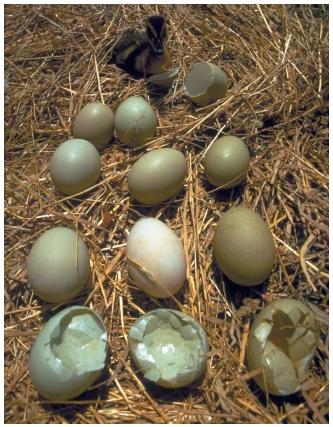
The other set of complications arising from so many different governments arises from the different environmental policies. The United States banned the use of the pesticide DDT in 1972 because it was weakening the eggshells of the bald eagle leading to their precipitous drop in population size. In the years following the decision, bald eagle numbers have risen. However, the chemical is still in common use in Mexico. Is it too far fetched to think that some of it is still affecting animals in America? Of course not.

There are other examples of conflicting environmental regulations. In most of the world, whales are protected by numerous marine laws, yet in Japan, there is still a viable whaling industry. Also, sea turtles are another endangered species that are protected by most countries. However, there are some that still allow the eggs and turtles to be harvested for food, jewelry, et cetera. The US Fish and Wildlife Service has laws that state what can and cannot be brought back into the country as an effort to curtail some of the killing of endangered species, but it is rarely enough. Until marine animals either learn to stay put or all the countries band together, there will always be threats to endangered species.

There have been efforts to try to flatten the world governments such as the United Nations and the European Union; however the UN has been shown to be relatively ineffective as certain countries choose whether to obey decisions or not. I am not advocating a worldwide government, but I do think that there need to be some regulation in certain laws or else the country with the most liberal laws will set the standard.

Wednesday, September 16, 2009


Thomas Friedman makes several very compelling arguments that the world is becoming flat. By “flat” he means that today, we have the means to communicate instantaneously with people form around the world. It is difficult to argue that because we are presented with so much evidence from our daily lives. I can take a 12 hour plane ride and end up on the other side of the world. And, when I am there, I can call home on my cell phone and talk to my loved ones. There is no delay or feeling of distance. It is the same as if I were only a mile away.

Because of our experience, it is easy to accept what Friedman says; however, he would make an even more powerful effect if he were to present some of the evidence proving otherwise. It seems that he is ignoring some of the effects that keep the world round.

Much of his criticism stems from his writing style. He relies extensively on metaphors which seems to irritate many of his readers. He does seem to enjoy metaphors, as the title of his book is a metaphor. I tend to agree to an extent. Maybe he should speak in reality instead of abstract terms.

He was also extensively criticized over his stance concerning our invasion of Iraq. Glenn Greenwald stated that Thomas Friedman is “one of the most frivolous, dishonest, and morally bankrupt public intellectuals burdening this country.” I think this is unfair because it really does not have anything to do with his writing but rather his personal political views. Maybe his methods should be criticized, but attacking the individual is wrong. Needless to say, Thomas Friedman has made quite a few enemies in his life, but none of those criticisms deal with his book The World is Flat. For those criticisms, we must look to Jack Schafer. He makes the first criticism concerning the book. He says that Friedman spent many of his New York Times columns promoting his book. Maybe this is taking his authoritative position too far. Perhaps Friedman’s readers do not always want to be bombarded with reminders of his stance on society.

One of Friedman’s harshest critics is New York Press writer Matt Taibbi. His first criticism is that Friedman always mentions the names of businesses in his work, even when it is not necessary. He uses one rather brash statement to refer to The World is Flat: “Friedman's new book is the worst, most boring kind of middlebrow horseshit.” This is mainly because Taibbi thinks that the book is very repetitive, which it is. I think that most of it could have been summed up with the statement, “The world is flat; it is becoming more incorporated than before.” This whole idea is ripped up by Taibbi in his article because he says the Friedman’s “10 flatterers” are just a recap of the past 2 decades of history. Of course, these events have impacted the world. They have drawn people together.

Thomas Friedman likes to use metaphors in his writing, and that is why many people despise it. Sometimes, examples such as that help the reader understand the material, but other times, it can be overwhelming and confusing. This is how many of his critics view his writing.

Tuesday, September 15, 2009


The first few times I encountered Wikipedia.com was in the fall of 2005. At that time, I was not sure what to make of it. It did not seem to be very well put together and looked sort of unprofessional to me. I remember searching for some obscure subjects for a high school speech, and the only place that seemed to contain any information was Wikipedia. I was a bit surprised that it actually even contained articles related to my subject. I choose to find material at other sources because it did not seem like something that could be trusted with my grade.

Now, 4 years later, I think Wikipedia has come a long way. I still would probably not trust it with my grade for a class, but I find myself constantly crawling back to that site for general knowledge information. For instance, if I want to find a famous person’s birthday or some of their accomplishments, there is no better source. All the information is right before me in a very easy to read format that filters out a lot of the fluff compared to other websites.

I remember in my First Year Seminar class, my professor instructed us to never use Wikipedia for any of our papers. He cited several sources of erroneous information that appeared as fact on the site. Most of them are not serious and are typically seen as a joke, but others stem from actually misinformation. Here are a few websites with errors contained in Wikipedia at one time or another. Link 1 Link 2 Link 3

Apart from some of the discrepancies in the content, Wikipedia really is an amazing concept. People from all over the world are able to give their input on a specific topic. This is a place where you do not just get one view of a subject—many people can give their view or a person, event, or object. Friedman was correct in asserting that this is one of the ways the earth has been flattened in the past several decades.

I like to watch The Office, and one of my favorite quotes involves Wikipedia. Steve Carrel’s character says in an interview why he likes Wikipedia so much.


Of course, this is meant to be a joke; however, it is the way some people view the site. I do not think it should be used for primary research, but rather as a source of guidance.

The example of Wikipedia is one of several that Friedman uses to assert the world is flat. However, there are many other websites that offer equally flattening experiences. Youtube, for instance, allows users to upload videos from anywhere in the world. This gives me, as an American, to see a clip from the life of someone in a different part of the world. I can see how a group of European teenagers spends their free time, and I could also see someone’s videos from their African Safari.

Another site that I believe contributed to a flat world is Facebook. I have friends from all over the world. If I wanted to find out what is happening in a specific place, there are only a few keystrokes away. I remember a year ago hearing news coverage of a story in Dubai. I was interested in learning more about it, so I asked one of my friends who is from there and got the rest of the story.

The world is definitely becoming flatter as the years go on. The Internet is a major contributor to that, in my opinion and in Friedman’s. As more websites pop up that allow people to voice their opinions and experiences, we will learn more about other people’s view of the world.

Wednesday, September 9, 2009

We hear all the time how horrible outsourcing is for America. After all, it takes jobs from hard working Americans and gives them to some unknown person in Asia who probably doesn't even speak any English. Additionally, so many American made products are now being produced overseas. I mean, what about our beloved Little Red Wagon? No longer will they be made in America, but now they are a product of Chinese labor. As if this were not bad enough, many of our patriotic products are also made abroad. What about those American flag that are stamped "Made in China?" Surely, we should not giving a foreign country the opportunity to manufacture a product that is to important to our country. OK, well we still have our American classics such as Levi's Jeans and Etch a Sketch's, right? Oh yeah, they are also now made in Asia. Maybe we should also have Asia make our apple pies while they are at it.

But, hold on a minute. Maybe this outsourcing is not such a terrible thing after all. For instance, this is not a one-way street. We also can benefit from some forms of outsourcing. For instance, German auto giants Mercedes and BMW have chosen to relocate some of their manufacturing to the United States (in Alabama and South Carolina). Maybe this is not such a terrible thing after all. But the main difference with this is that the automobiles manufactured in American stay in America. They are no shipped back to Germany and the rest of Europe. These automakers must have decided it is cheaper to move some of their engineers and equipment to America rather than to export all of their automobiles.

However, we have some products that are made from American components that are assembles abroad. Can it really be cheaper to sent the materials over seas, have some foreign factory workers assemble the materials, and re-import the final product? It must be, because this is done every day. So, the question arises as to how much less they are paying these international workers? In the example of the Etch A Sketch, American workers made about $9 per hour while the Chinese workers made $0.24 per hour (Link). It is easy to see how tempting it would be for a company to take advantage if this cheap labor. On top of that, many of these international employees are happy to work at all. These factory jobs are usually much better than what they would be doing otherwise.

My eventual career goal involves environmental degradation and policy. I think it would be rather difficult that someone in an office around the world would be able to perform a job the same way as a local person would. Environmental concerns span the globe which means that there will always be a site to be researched or a plant or animal that needs saving. I imagine that maybe some parts of that job could be done remotely, but the physical observation and collection of data needs to be done by someone who is actually at the location.

Dipping the Basketball in a Bowl of Change

In The Dip, Seth Godin attempts to motivate his readers with the concept of "The Dip" in every endeavor. It is during this dip that many people begin to grow weary of their activity and are tempted to give in. I think that this dip he speaks of can be applied to one's life in several ways. The first is the way that Godin applies his lesson. However, I believe that there is another instance of a dip in a person's life.

I mentioned in class that I am involved with teaching elementary and middle school children basketball skills during the summer. I have done this for around 8 years now and have coached several hundred young people. During that time, I have observed two main types of players and mentalities.

The first group of players believe they have all the right answers and are the best at every drill. Many times, it is obvious that they are mistaken. They do not want to be told what to do, and they generally like to talk and socialize instead of listening to their coach. Because of that, they rarely know what to do.

The second type of players are those who are receptive to criticism and instruction. They are usually not the best at each drill, but they are willing to change their actions so they may be able to improve.

Usually the first type of player is actually better than the second, but because they do not use the correct form in the exercises, they will never be able to improve beyond a certain point. That second type can very well be less skilled than the first, but they have a better chance of being a better player due to their receptive attitude.

I have told players before they need to change their shot in order to become a better player. However, they do not want to hear that. They respond, "But I can make 60% of the shots my way." That may be true, but they will never be able to make more than that. These players are on a cul-de-sac path. They can practice as much as they want, but because they are practicing the wrong way, they will never improve upon that 60%.

Say, for instance, that the receptive player also makes 60% of their shots, but they listen when they are told to modify their form. Their percentage may drop to 40% during their period of "re-learning." This is their "dip." Some players to not like that their shot percentage drops when they change their form and revert to the incorrect method. These are the players who give up when they are faced with a difficult dip. However, there are those players who heed to our advice and stick it out through that dip. True, their percentage will drop for a time, but after several weeks or months it will steadily increase. Eventually they will be as good as they were before, and before long, they will far exceed that initial skill level. They may be shooting at a percentage of 80-85% or even higher.

Those players are rewarded because they stick with it during the dip. That is what separates mediocre players from those who play at the college or professional level. They best players that I have ever coached is also the most receptive. When he is told to do something differently, he goes home, works through that dip, and returns much better than before.

The same goes for any other skill in life. If one refuses to modify bad study habits, that student may never be able attain grades better than a "C." If an athlete does not routinely change his exercise regiment, he will reach a plateau and never gain any more strength. And, if one still types "hunt-and-peck" style he will never be able to attain a very high word per minute score.

While it is very tempting to quit when one is in a dip or before one ever reaches a dip, it must be realized that if there is no dip, there is only mediocrity.